
Finding a horse with good movement isn’t hard. Finding one with the right horse temperament—noble, calm, and confident—that’s a different story.
If you’re looking for an Iberian horse—a Lusitano or a PRE—you probably have a clear picture in mind: elegance, presence, connection. But you also want something that isn’t always mentioned in the ads: a horse that makes you feel safe. In the arena, in the barn, and in everyday life.
Many of my clients tell me the same thing: they want a horse that makes them feel secure and connected, not just impressed. I understand that completely, and it’s exactly what I look for in every horse I select.
After more than 20 years breeding and selecting Iberian horses, I can tell you that evaluating temperament is the first thing I do. Before looking at movement, before thinking about training level. Because a horse that’s difficult to handle, no matter how spectacular, ends up being a problem instead of a dream come true.
In this article, I’ll share exactly what I look for—and how you can do the same before making your decision.
The eyes reveal a horse´s true temperament
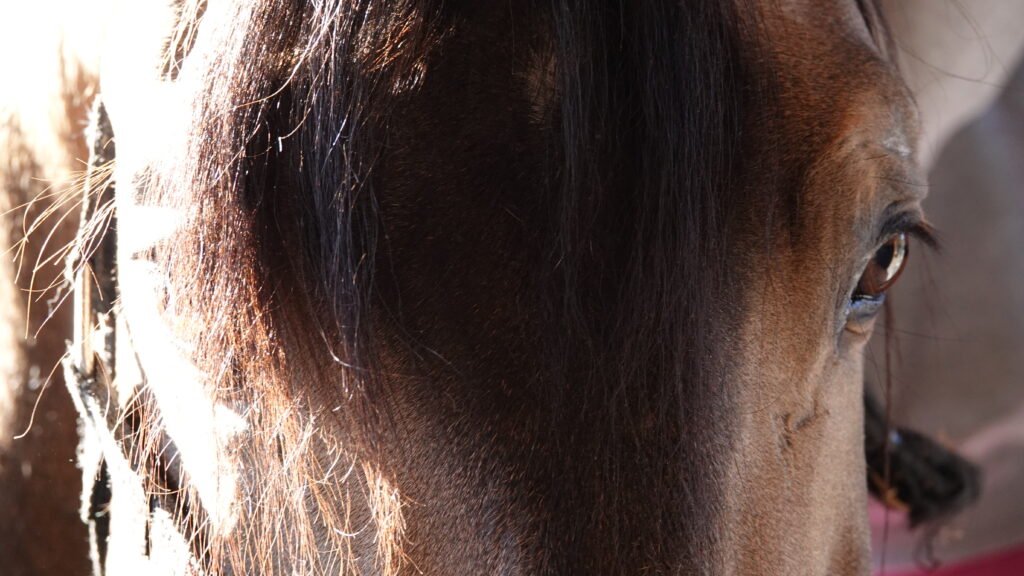
The first thing I look at in a horse is the way he looks at me.
A noble horse keeps his eyes on you, but not with tension or distrust. He watches you with curiosity, like someone recognizing an ally. That calm, attentive but relaxed gaze tells me more about his character than any movement video ever could.
If a horse looks at me with suspicion, ears pinned back, or constantly avoids eye contact, I already have important information. It doesn’t mean he’s “bad,” but he’s probably not the kind of partner my clients are looking for.
The small tests that reveal the truth
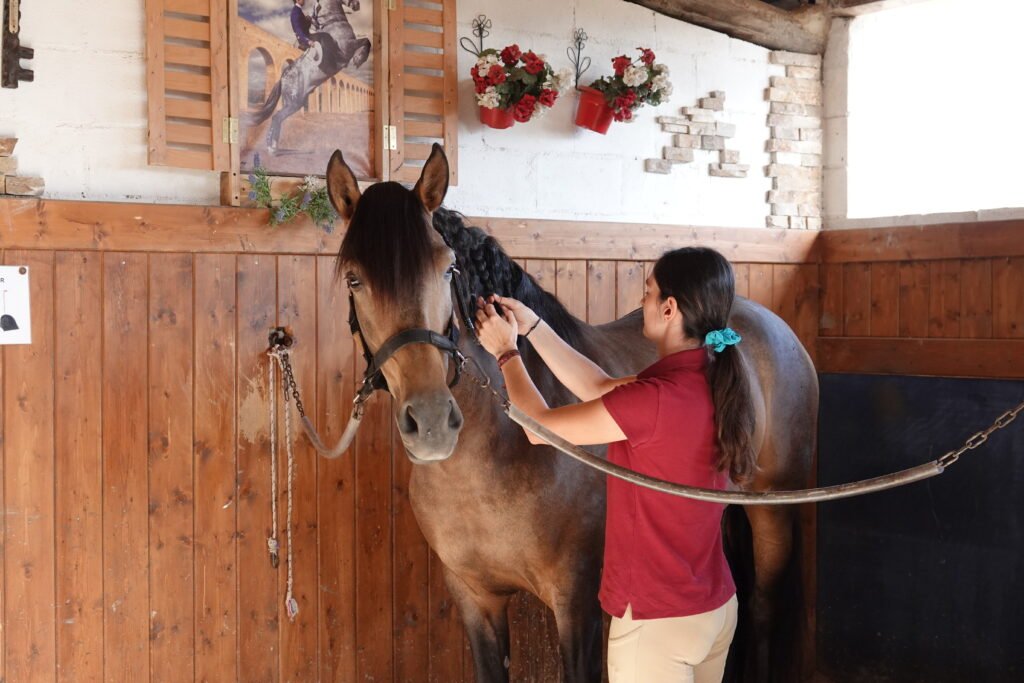
Any horse can seem calm while being ridden in an arena for 10 minutes. But true character shows up in the everyday details. These are the things I always observe:
In the stall: How does he react when I walk in? Does he come toward me with curiosity, or retreat to the back? Does he accept the halter without resistance?
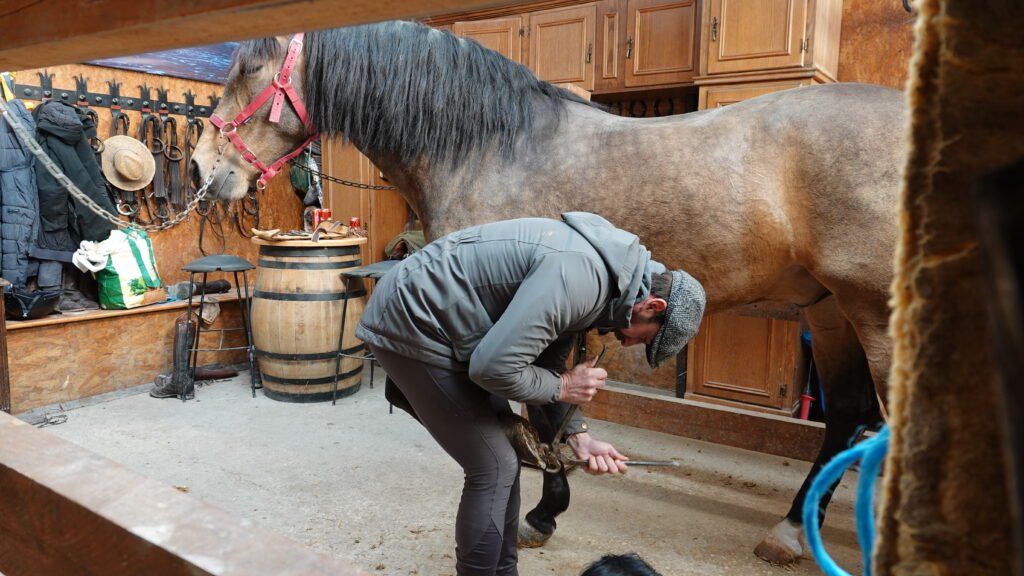
Handling his feet: Can I pick up his front and back feet to clean his hooves without tension? A horse that won’t let you handle him calmly is a horse that will cause problems with the farrier, the vet, and any situation where you need him to trust you.
Leading out of the stall: Does he drag me out or walk beside me, paying attention to my cues? Does he look around but still respect my space? A horse can be alert without losing his composure.
With other horses: How does he behave in the paddock? Is he aggressive, fearful, or simply calm within the group?
This can’t be trained in a week
Many sellers can “prepare” a horse to seem calm on the day of a visit. But true temperament can’t be manufactured for an occasion.
What I look for in my horses is the result of work that starts when they’re foals. Calmness, a soft voice, consistent contact. I use a slow, quiet whistle that sparks their curiosity. They come to me because they want to, not because I force them.
When a horse has been raised this way, his temperament reflects it—he trusts people by default. He doesn’t react with fear to new situations. He doesn’t fight basic handling. He’s a horse you can live with, not just ride.
Buying from a distance: what you need to know
I know that buying a horse from another continent—and trusting someone else’s assessment of its temperament—requires an extra level of trust. You can’t just stop by the barn on a random Tuesday to see how he behaves.
That’s why, when I show a horse, I don’t just send you videos of him being ridden. I show you how he enters the stall, how he lets me handle his feet, how he reacts to everyday situations. I want you to see exactly what you would see if you were here with me.
I’ve sent horses to California, Florida, Texas-all meeting USDA import requirements and the feedback is always the same: “The temperament is exactly what you told me.”
That sentence means more to me than any flashy movement video.
What my clients always mention first
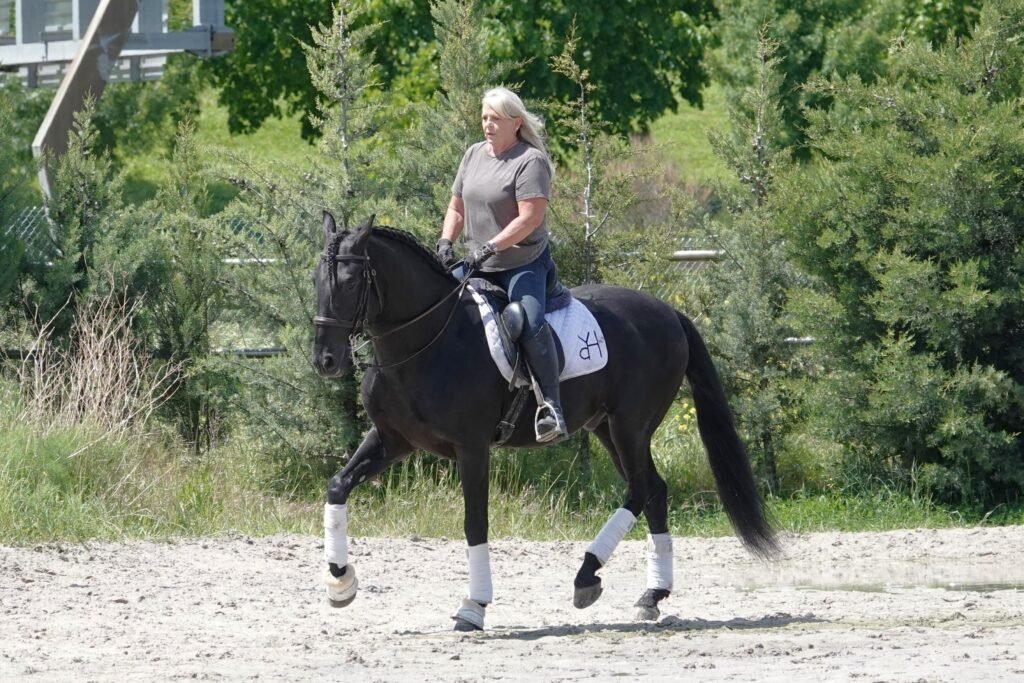
After years of selling horses to the United States and Europe, I’ve noticed a pattern.
When I talk to my clients months after the purchase, the first thing they mention isn’t the movement. It’s not the training level. It’s not how spectacular he looks.
They talk about the horse´s temperament and character. How easy he is to work with. How he greets them at the stall door every morning. The connection they’ve built.
That, to me, is the true success of a sale.
My philosophy: movement can be developed, character cannot
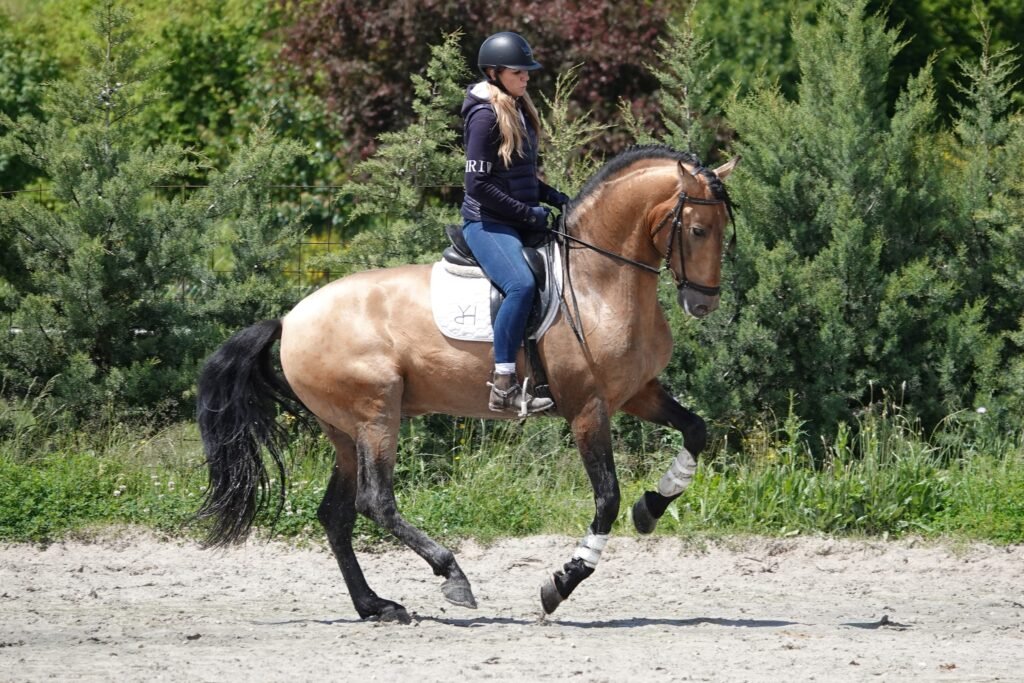
I’d rather show you a horse with less training but a golden temperament than a spectacular horse you can’t live with.
Movement can be improved with work. Talent can be polished with training. But a difficult horse temperament is a daily battle that drains your energy and your joy.
If you’re looking for a horse that will be your true partner—not just a beautiful animal for the arena—then we’re speaking the same language.
Looking for a horse with the right temperament for you?
If you want an Iberian horse that combines quality, movement, and a noble character, I’d love to hear about your situation. Tell me what you’re looking for, and I’ll help you find the right partner.